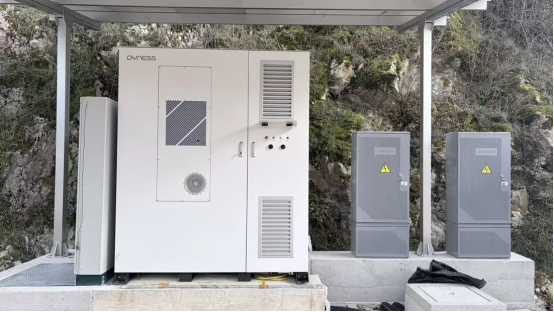
The rapid expansion of renewable energy has increased the demand for reliable and scalable storage technologies within modern battery energy storage systems. Among the most widely adopted technologies, LFP (LiFePO4) battery storage products stand out due to their safety, long cycle life, and thermal stability. These characteristics make them highly suitable for integration into both solar-based and grid-scale infrastructures, where stability and efficiency are essential for continuous energy supply.
Integration in Solar-Plus-Storage Systems
In distributed solar applications, LFP (LiFePO4) battery storage products are commonly paired with photovoltaic systems to store excess daytime energy for later use. A practical example is the Dyness DH200F deployment in Trivigliano, Italy, where dual systems were installed with 80 kW PV and 215 kWh storage per unit. These battery energy storage systems capture surplus solar generation during peak sunlight hours and discharge it during evening demand peaks, ensuring stable and continuous power availability in a community care project setting.
Grid Support and Parallel Scalability
At grid scale, LFP (LiFePO4) battery storage products are increasingly used to enhance grid stability and support peak shaving functions. The Dyness DH200F system demonstrates strong adaptability with its all-in-one design and parallel connection capability via a medium-voltage cabinet. This allows multiple battery energy storage systems to operate in synchronized configurations, enabling scalable capacity expansion while maintaining consistent performance even in demanding environments such as mountainous regions.
Reliability and Long-Term Operational Value
One of the key advantages of LFP (LiFePO4) battery storage products is their durability and safety profile, which is critical for long-term energy infrastructure. Within advanced battery energy storage systems, these batteries ensure reduced degradation and stable performance across repeated charge-discharge cycles. Dyness solutions highlight how integrated solar-plus-storage architectures can maintain reliable energy output while supporting future scalability and system resilience.
Advancing Integrated Energy Infrastructure
As renewable deployment accelerates, the role of LFP (LiFePO4) battery storage products in modern battery energy storage systems becomes increasingly central. Through real-world applications such as Dyness DH200F installations, solar and grid-scale energy systems achieve higher efficiency, improved stability, and enhanced adaptability for evolving energy demands.