In the rapidly evolving landscape of advanced medicinal products, ensuring the biological safety of cell-based therapies is a cornerstone of regulatory compliance. Among the various contaminants that threaten the integrity of a laboratory environment, mycoplasmas are perhaps the most insidious. These small, wall-less bacteria can significantly alter host cell metabolism, gene expression, and growth rates without visible signs of turbidity in culture media. For 2B stakeholders—ranging from contract development and manufacturing organizations (CDMOs) to specialized quality control (QC) laboratories—implementing a rigorous mycoplasma test protocol is not merely a recommendation; it is a critical operational necessity.
Choosing the right methodology for mycoplasma DNA isolation is the first and most vital step in this process. While traditional culture methods have long been the gold standard, the fast-paced nature of cell therapy production requires the speed and sensitivity of Nucleic Acid Amplification Techniques (NAT), such as qPCR. However, the efficacy of any molecular detection method is fundamentally limited by the quality and purity of the starting genetic material.
Understanding the Challenges of Mycoplasma Detection
Mycoplasmas present unique challenges for DNA extraction compared to standard bacteria. Due to their lack of a cell wall and their remarkably small size (often 0.1 to 0.3 μm), they can exist at high concentrations in cell supernatants or hidden within host cells. In a high-stakes QC environment, the mycoplasma dna isolation process must be capable of handling complex matrices, including high-density cell suspensions and protein-rich media, while effectively removing PCR inhibitors that could lead to false-negative results.
For laboratories partnering with ExCell Bio, the focus remains on achieving maximum recovery of low-abundance DNA. In cell therapy, where patient-derived samples are often limited in volume, the isolation kit must demonstrate high sensitivity. If the extraction process fails to capture the mycoplasmic DNA present in a sample, even the most advanced thermal cycler will fail to provide an accurate safety profile, potentially compromising patient safety and leading to catastrophic regulatory setbacks.
Selecting the Right Isolation Strategy for QC Labs
When evaluating kits for mycoplasma dna isolation, technical directors must look beyond simple yield. The selection criteria should be centered on three pillars: purity, reproducibility, and compatibility with downstream NAT assays.
Lysis Efficiency: The buffer system must be optimized to release DNA from various mycoplasma species (such as M. orale, M. hyorhinis, and A. laidlawii) without degrading the genetic material.
Inhibitor Removal: Cell culture components, such as phenol red or fetal bovine serum (FBS), can interfere with enzymatic reactions. A professional-grade kit ensures these are washed away completely.
Scalability: For B2B operations managing multiple batches, the method must be standardized to minimize operator-to-operator variability.
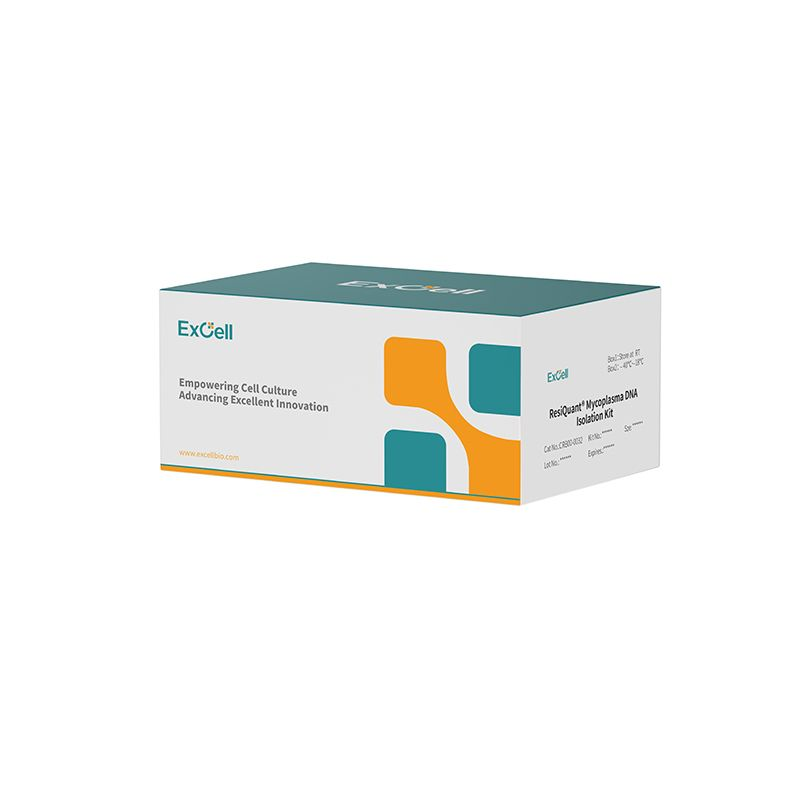
The ResiQuant® Mycoplasma DNA Isolation Kit: Excellence in Sample Preparation
The ResiQuant® Mycoplasma DNA Isolation Kit features an optimized extraction process designed to facilitate high-throughput processing. Engineered to address the challenges of complex sample matrices, this system provides a cleaner and more efficient approach to mycoplasma test preparation, ensuring reliable results even when handling high-protein samples that typically hinder traditional extraction methods.
Product Specifications
Product Name: ResiQuant® Mycoplasma DNA Isolation Kit
Technology: Optimized Chemical Lysis and Purification
Sample Type: Cell culture supernatant, vaccine raw materials, cell suspensions, and cell products
Sensitivity: Optimized for trace amount and low-copy number detection
Performance: High recovery rate with minimal sample loss
Compatibility: Compatible with various NAT-based mycoplasma detection kits and automated platforms
This kit is specifically designed to work in tandem with the ResiQuant® Mycoplasma Detection Kit, creating a seamless “sample-to-result” workflow. By utilizing ExCell Bio’s advanced isolation technology, QC labs can ensure that the DNA template used in their assays is of the highest possible caliber, meeting the stringent requirements of international pharmacopeias.
Enhancing Laboratory Throughput and Compliance For organizations looking to streamline their QC workflows, the ResiQuant® Mycoplasma DNA Isolation Kit represents a significant upgrade in laboratory efficiency. Its proprietary buffer system ensures consistent recovery rates across various mycoplasma species, preserving the integrity of genomic DNA for downstream analysis.
In the context of mycoplasma testing, consistency is the bedrock of compliance. Achieving high sensitivity consistently is only possible when the isolation step is optimized to eliminate interference from the sample matrix and prevent sample loss. The ResiQuant® series is tailored for this specific purpose, ensuring that even the most challenging samples yield clean, concentrated DNA—differentiating a high-performing QC lab from one plagued by inconclusive results.
Conclusion
In the competitive world of biotechnology, the ability to guarantee a mycoplasma-free environment is a significant value proposition for any B2B service provider. By prioritizing a robust method for mycoplasma dna isolation, laboratories can safeguard their cultures, protect their data integrity, and ultimately ensure the delivery of safe therapies to patients.
Utilizing proven solutions from ExCell Bio, such as the ResiQuant® isolation series, allows organizations to meet global regulatory standards with confidence, turning a complex biological challenge into a manageable, standardized routine.