An overhead crane can remain in operation for many years, but calendar age alone does not determine whether it is still suitable for continued service. Two cranes installed in the same year may have very different conditions because their workloads, operating cycles, maintenance histories, and environments can vary significantly.
For facility owners, engineers, and maintenance teams, the more useful question is not simply how old a crane is, but how much service life remains in its critical systems. Evaluating crane components, operating history, structural condition, and fatigue exposure provides a more practical basis for maintenance, refurbishment, or replacement decisions.
Why Calendar Age Is Not Enough
The service life of an overhead crane depends on how intensively it has been used. A crane operating several shifts every day under frequent heavy loads experiences significantly more stress than equipment used occasionally for light-duty handling.
Load cycles are particularly important. Repeated lifting, acceleration, braking, and travel create cyclic stresses in structural and mechanical components. Over time, these stresses can contribute to fatigue, even when no obvious damage is visible during a basic inspection.
Environmental conditions also matter. High humidity, corrosive substances, dust, extreme temperatures, and outdoor exposure can accelerate deterioration of structural and mechanical parts.
Identify the Crane Components That Matter Most
A useful assessment begins by dividing the crane into its major systems. An overhead crane typically includes the bridge structure, main girders, end carriages, wheels, runway interface, hoist, trolley, wire rope, hook, drum, sheaves, brakes, motors, gearboxes, electrical systems, and safety devices.
Each component has a different failure mechanism and service requirement.
Structural members may be affected by fatigue, deformation, corrosion, or weld deterioration. Wheels and end carriages can experience wear caused by misalignment or repeated travel. Hoisting equipment is exposed to repeated loading, while brakes and electrical components may deteriorate through operating cycles and environmental exposure.
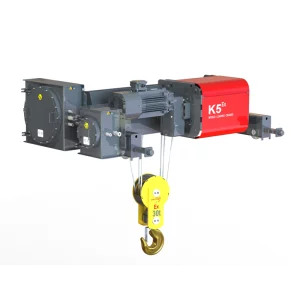
WORLDHOISTS provides crane kits and components including end carriages, gearmotors, and crane kits and lifting attachments. Its product range also covers hoists and electrical and electronic systems, allowing different parts of a lifting system to be considered as an integrated solution.
Use Crane Design Life Analysis to Understand Fatigue Exposure
Crane design life analysis provides a more meaningful way to assess service potential than simply counting years since installation.
The analysis should consider factors such as rated capacity, average load, lifting frequency, travel cycles, operating hours, duty classification, and historical usage. These factors help determine how much cyclic loading the crane components have experienced.
For example, a crane designed for frequent lifting cycles may accumulate fatigue exposure much faster than one used intermittently. Even if both cranes have been installed for the same number of years, their remaining service potential may be substantially different.
The original design documentation can provide valuable information, including rated loads, duty class, structural calculations, component specifications, and expected operating cycles. When historical records are incomplete, current inspection data and operational measurements become increasingly important.
How Overhead Crane Lifespan Calculation Works
An overhead crane lifespan calculation should not be treated as a simple formula based on installation date. Instead, it should combine design assumptions with actual operating conditions and inspection findings.
A typical assessment may examine the number of working cycles, load spectrum, stress ranges, component condition, and applicable fatigue classifications. The results can then be compared with the crane’s original design assumptions.
This process is particularly useful when a crane has undergone changes in production. If lifting frequency or average loads have increased over the years, the original service-life assumptions may no longer accurately represent current operating conditions.
Maintenance records can provide additional evidence. Information about repairs, component replacements, overload events, abnormal vibration, corrosion, and recurring faults can help engineers understand how the crane has performed throughout its operating history.
Evaluate Crane Fatigue Life, Not Just Visible Wear
Crane fatigue life is one of the more difficult aspects of service-life assessment because fatigue damage may develop gradually.
Repeated stress can create microscopic cracks that become more significant over time. Critical areas may include welded joints, structural connections, highly loaded sections, and other locations exposed to repeated stress concentrations.
For this reason, a visual inspection should be considered one part of a broader assessment rather than the complete evaluation.
Depending on the crane’s condition and application, qualified personnel may use dimensional checks, non-destructive testing, structural inspection, load assessment, or other engineering methods to identify potential fatigue-related problems.
Particular attention should also be given to changes in operating behavior. Unusual vibration, increased noise, uneven travel, abnormal braking, load sway, or repeated component failures can indicate that further investigation is necessary.
Supporting Long-Term Crane Performance With the Right Components
Determining the service life of an overhead crane requires more than knowing when it was installed. The condition and fatigue exposure of individual components, together with actual operating conditions, provide a much clearer picture of future performance.
WORLDHOISTS offers crane components and complete crane-related solutions covering crane kits and lifting attachments, gearmotors, end carriages, hoists, and control systems. Its engineering capabilities also include crane calculation tools designed to support standard crane kit design and corresponding drawings.
For an aging crane, the goal should not simply be to keep equipment running for as long as possible. The objective is to understand its actual condition, identify critical risks, and determine the most appropriate path forward. With systematic inspection, crane design life analysis, accurate overhead crane lifespan calculation, and condition-based decisions, organizations can make better choices about maintenance, modernization, and replacement while keeping lifting operations reliable and predictable.