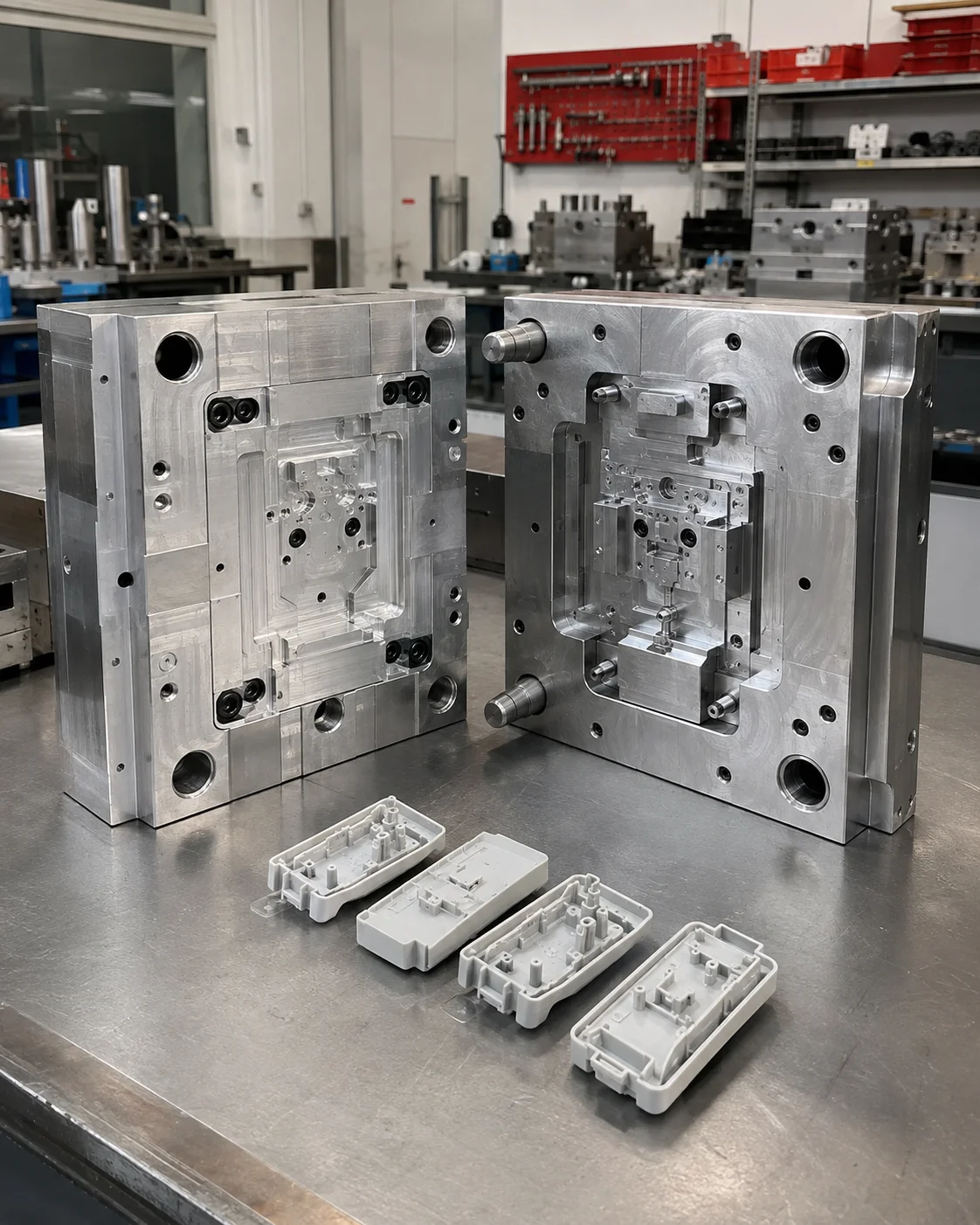
Global product development managers frequently seek offshore manufacturing partners to compress development cycles and reduce capital expenditures on complex hardware projects.
Sourcing custom molds internationally requires a careful evaluation of regional supply chain capabilities, technical transparency, and lead-time reliability. Securing dependable short-run production relies heavily on partnering with specialized providers operating within established industrial clusters.
Organizations exploring rapid tooling China options often discover unique advantages in integrated machine shops and specialized regional labor pools. Maximizing these overseas partnerships demands structured communication channels and rigorous design oversight from initial concept to final component delivery.
Establishing clear performance benchmarks early prevents costly misunderstandings and ensures smooth project execution across distributed teams navigating tight commercial schedules.
Mapping Regional Supply Chain Clusters and Industrial Advantages
Industrial clusters dedicated to custom manufacturing offer distinct logistical efficiencies that domestic machine shops rarely match. Regional supply networks provide immediate access to specialized alloy suppliers, heat-treatment facilities, and standardized mold components under one roof.
HordRT leverages this localized infrastructure to minimize material transit delays and accelerate overall project velocity. Procurement specialists looking into overseas markets benefit from highly competitive pricing structures without compromising structural precision or material compliance.
Evaluating potential manufacturing partners requires looking beyond basic quotation sheets to examine true shop-floor technical competence. Successful overseas collaboration depends on transparent engineering reviews that catch draft angle errors and wall thickness inconsistencies early.
Suppliers equipped with advanced computer-aided manufacturing systems streamline tool creation while maintaining strict dimensional tolerances. Cultivating long-term relationships with established regional fabricators ensures consistent component quality across multiple production batches and challenging project timelines.
Detailed supply chain mapping also reduces exposure to unexpected logistic bottlenecks during peak production cycles.
Evaluating Material Selection and Core Machining Precision
Selecting an appropriate mold material can influence tooling life, machining requirements, thermal management, and overall project cost. Aluminum alloys such as 7075 may be considered for short-run tooling where reduced tooling weight, relatively straightforward machining, and shorter development cycles are relevant to the project requirements.
Pre-hardened structural steels provide enhanced wear resistance when production volumes demand thousands of consistent injection cycles. Matching alloy selection to expected market demand prevents premature mold degradation and costly mid-run tool replacements during critical testing phases.
Precision machining centers utilize multi-axis milling, deep-hole gun drilling, and electrical discharge machining to carve complex core and cavity geometries. HordRT implements rigorous quality checkpoints during every stage of CNC milling and mold fitting to guarantee flawless execution.
Technicians verify parting line seals and ejector pin alignments meticulously before initiating initial physical resin trials. Maintaining strict dimensional control during machining prevents flash formation and reduces secondary finishing labor downstream significantly. Thorough tool validation procedures protect the integrity of the final molded geometry under high operational pressures.
Overcoming Time-Zone Distance Through Digital Project Oversight
Geographic separation introduces potential communication hurdles that can derail tight product delivery schedules if left unmanaged. Organizations leveraging rapid tooling china benefit from robust digital dashboards that eliminate communication delays across international borders.
Establishing dedicated project management protocols ensures that technical clarifications are addressed rapidly despite international time-zone differences. Transparent digital portals provide real-time visibility into machining progress, inspection reports, and sample approval milestones.
Maintaining open dialogue channels minimizes misunderstandings regarding critical fitment tolerances or specialized surface finishing requirements.
Quality assurance protocols must be integrated directly into the manufacturing workflow rather than treated as a final inspection step. Detailed dimensional reports, coordinate measuring machine data, and first-article inspection samples verify that physical parts match approved CAD data.
Experienced overseas suppliers provide comprehensive documentation packages that simplify incoming quality control checks upon delivery. Rigorous verification standards protect proprietary intellectual property and ensure complete regulatory compliance for global distribution networks. Continuous digital tracking empowers engineering teams to maintain total control over project milestones from afar.
Bridging Short-Run Production Directly Into Commercial Scale
Project teams exploring rapid tooling china capabilities must plan for smooth scalability once initial market validation concludes successfully. Standardized modular mold base systems allow core and cavity inserts to be swapped efficiently as design requirements evolve.
HordRT utilizes flexible insert strategies to bridge the gap between initial prototype evaluation and full-scale commercial manufacturing. Careful scalability planning prevents redundant tooling expenditures and accelerates time-to-market milestones for growing hardware businesses.
Balancing speed, cost, and structural integrity requires continuous refinement of manufacturing parameters throughout every operational lifecycle stage. Strategic investments in flexible tooling platforms empower engineering groups to iterate rapidly without inflating capital budgets.
Collaborating with seasoned international manufacturing specialists removes operational uncertainty from complex global supply chains. Achieving long-term market success depends on maintaining uncompromising engineering standards from the first digital upload to final mass shipment. Seamless transitions eliminate costly redesign cycles and optimize overall supply chain resilience.
Building Reliable Global Hardware Supply Chains
Successful international hardware execution ultimately depends on proactive risk management and clear technical alignment between development teams. Selecting proven manufacturing networks transforms geographic separation into a distinct operational advantage for fast-moving commercial enterprises.
Uncompromising attention to material specifications and dimensional verification ensures that custom components perform reliably under demanding field conditions. Forward-thinking organizations will continue leveraging global fabrication ecosystems to accelerate innovation while maintaining strict financial efficiency. Building resilient supplier relationships guarantees long-term competitiveness in fast-evolving global markets.