A diesel oxidation catalyst may show strong conversion after the exhaust is fully warm and still contribute little during repeated cold or low-load periods. The difference makes light-off behavior a central question in supplier evaluation. A quoted efficiency at one hot test point cannot reveal how quickly a catalyst begins meaningful oxidation as the exhaust temperature rises.
Light-off is often described through a conversion threshold at a stated temperature, but the figure is meaningful only with its test conditions. Pollutant concentration, exhaust flow, heating rate, catalyst age, and the selected threshold can all change the reported result. A diesel oxidation catalyst light off temperature should therefore be read as part of a test record, not as an inherent constant printed on a product nameplate.
Define the Measurement before Comparing Numbers
Light-off measurements depend on inlet gas, heating rate, and the conversion threshold. One supplier may report the temperature for a selected carbon monoxide conversion level; another may use hydrocarbons or a different threshold. Even for the same pollutant, a fresh sample and an aged sample answer different durability questions.
Converting those records into a simple ranking without aligning the conditions risks selecting a design for the wrong reason. Catalysts suppliers may use different definitions of the threshold, so the underlying curve and test protocol are more informative than a headline temperature.
Exhaust flow also matters because it changes how long the gas contacts the coated channels. A faster temperature ramp can also produce a different observed response from a slow, steady rise.
The measurement should identify where temperature was recorded, which conversion curve was used, and whether the catalyst had experienced prior thermal exposure. These details establish what “earlier” or “later” light-off actually means for the intended engine cycle.
The engine’s own temperature distribution provides the other half of the comparison. A nominal advantage matters most where the exhaust spends substantial time near the activation range. If operation rarely enters that range, package size, pressure drop, durability, or another performance constraint may dominate the decision.
The value of a light-off result is inseparable from the duty cycle it is meant to serve. Idle periods and repeated restarts deserve particular attention because the catalyst can cool between events even when the engine reaches a favorable temperature during longer operation.
Consider the Substrate’s Thermal Behavior
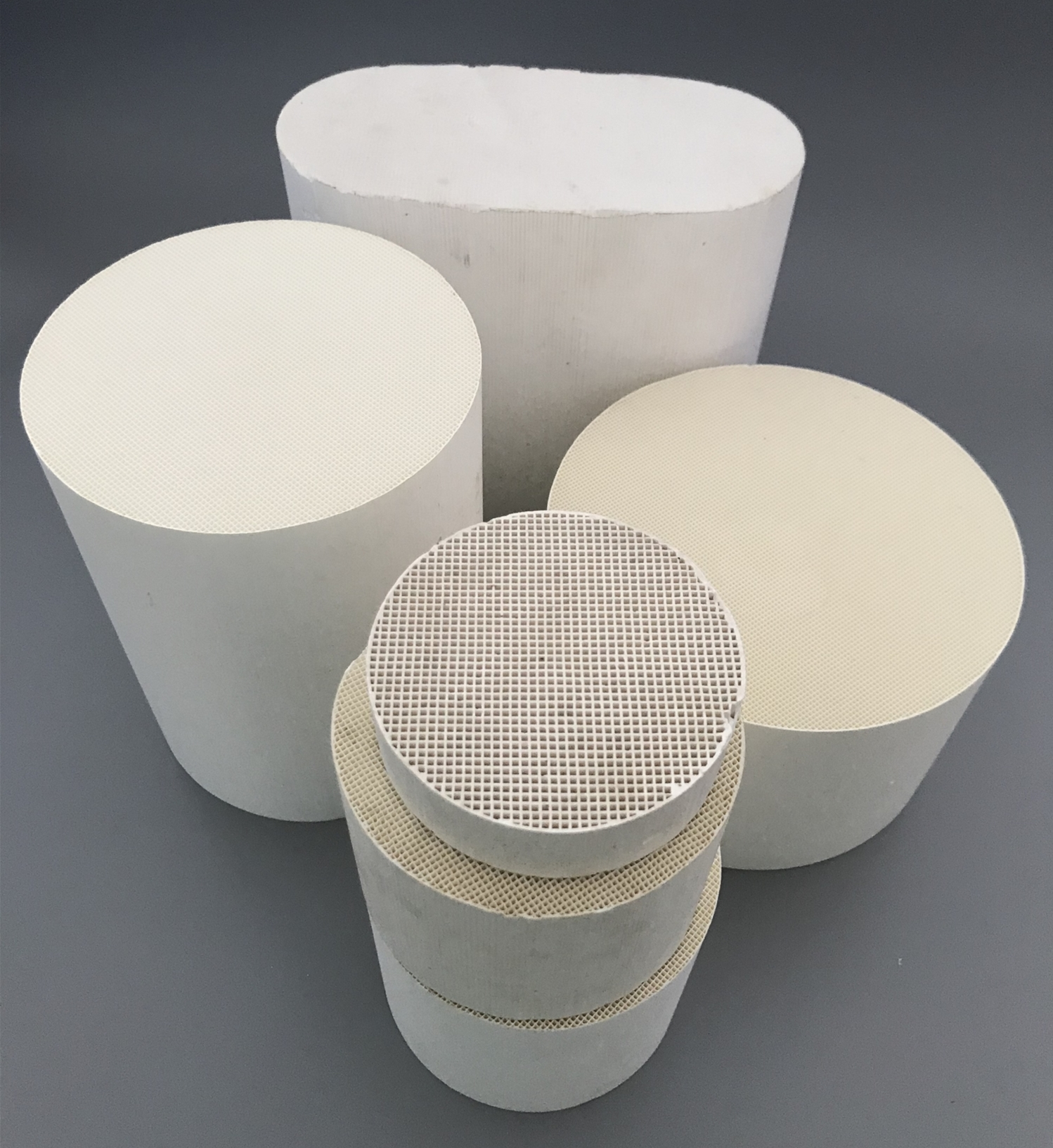
Metal and ceramic substrates do not transfer and retain heat in exactly the same way. Faster heat transfer can help a catalyst reach an active temperature sooner under certain conditions, while geometry, mass, coating, and installation still affect the installed result.
Hualian Catalyst states that its metallic DOC substrates offer higher thermal conductivity and faster light-off than its ceramic options. Both materials are offered for diesel oxidation service.
The company’s DOC information does not publish one universal numerical light-off temperature. That absence should not be filled with a guessed figure or treated as proof of a particular performance level.
The product description instead provides attributes for a technical discussion: ceramic or metal construction, a structure intended for low pressure loss and high catalytic activity, and a substrate described as capable of withstanding exhaust temperatures above 600°C.
An exhaust component must also fit the system’s backpressure and durability limits. A design that heats rapidly but restricts the exhaust excessively may be unsuitable. Likewise, thermal conductivity alone does not establish coating activity or resistance to long-term aging.
Comparisons among catalysts suppliers depend on conversion curves, pressure data, and durability results gathered under conditions relevant to the same engine program. An upstream temperature reading can differ from the DOC inlet reading after heat loss in the intervening pipework, changing the apparent light-off threshold reported for a given test.
Ask for Comparable Evidence
Changing the threshold shifts the light-off point; comparisons depend on pollutant, inlet gas composition, flow or space velocity, temperature ramp, and conditioning. The record also includes a temperature trace alongside conversion instead of an isolated crossing point.
A curve shows whether two catalysts differ only near one threshold or across the broader range in which the engine operates. A diesel oxidation catalyst light off temperature recorded after aging may differ from a fresh-sample result; both values matter when the application demands a durable low-temperature response.
Pressure loss and thermal limits belong in the same evidence package. If a supplier proposes a metal substrate for faster response, the comparison should show how that version performs against the ceramic option at the specified size and flow.
The claim can then be judged against the cost and packaging implications of either construction. A system-level trial remains necessary because sensor location and exhaust routing can modify the thermal history seen by the catalyst.
The evaluation should end with a defined application, not a universally “best” DOC. Operating temperatures, target pollutants, and installation constraints determine which differences in light-off have practical value.
A diesel oxidation catalyst light off temperature is informative when its test method is transparent and the curve is measured against the engine’s real temperature profile. On that basis, catalysts suppliers can be compared through evidence rather than an unqualified number.