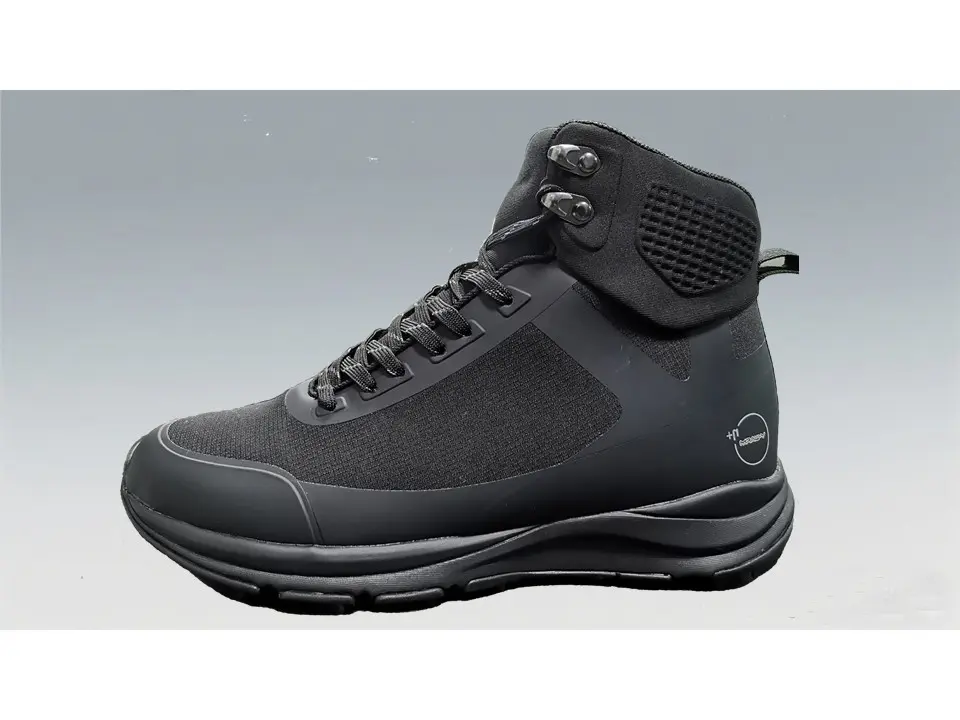
Footwear insulation involves more than keeping cold air away from the feet. Internal space, flexibility, moisture exposure, and repeated compression all influence how comfortably a shoe performs throughout the day. A thick insulating layer may retain warmth, yet it can also reduce toe room or make footwear feel rigid.
These competing requirements have encouraged manufacturers to explore lightweight insulation materials that provide thermal protection without significantly increasing shoe volume. Comparing felt with newer engineered alternatives reveals how material structure affects warmth, durability, and manufacturing compatibility.
Felt Insulation: Traditional Protection and Its Limitations
Felt is widely used in footwear because its dense fiber network can trap air and provide a cushioning effect. It is commonly manufactured from wool, synthetic fibers, or blended materials through mechanical or thermal bonding. The resulting structure offers a relatively simple way to introduce insulation into shoe uppers, linings, insoles, and removable inserts. Its availability and established processing methods also make felt familiar to footwear manufacturers.
Thermal performance in felt depends on fiber composition, thickness, density, and the amount of air retained between fibers. Wool felt can provide useful insulation because its crimped fibers create spaces that restrict heat movement. Synthetic felt offers additional control over weight, moisture absorption, and dimensional properties. However, increasing density or compressing the material during production may reduce the volume of trapped air, affecting its insulating capability.
Moisture presents another consideration. Wool fibers can absorb considerable amounts of water vapor, while synthetic felt generally exhibits different absorption and drying characteristics. Once moisture accumulates, the material may feel heavier and take longer to dry, depending on its composition and construction. In footwear, where perspiration and limited ventilation are common, manufacturers need to evaluate moisture behavior alongside thermal resistance rather than treating insulation as an isolated function.
Engineered Insulation: How Thin Structures Improve Shoe Design
Newer insulation technologies use controlled microscopic structures to restrict heat transfer without depending entirely on fiber thickness. Some materials contain enclosed cells, while others incorporate fine porous networks that reduce gas movement. These structural approaches can achieve low thermal conductivity with relatively little material, creating opportunities for footwear designs that require warmth within a restricted internal space.
Thickness is particularly important in shoe construction. Unlike jackets, footwear has limited room between the foot and the external upper. Excessive insulation can affect the fit around the toes, instep, and heel, while overly rigid layers may interfere with natural foot movement. Thin insulation can help preserve the original shoe dimensions, although its actual effectiveness still depends on the surrounding materials, construction quality, and environmental conditions.
Y-Warm develops ultra-thin insulation technology for applications including footwear. Its material is positioned between the upper and lining, with integration methods such as sewing, PUR lamination, or other compatible bonding processes depending on the shoe construction. The company’s approximately 0.7 mm material thickness illustrates how specialized insulation can accommodate footwear designs where internal volume is a major constraint.
Felt vs. Modern Insulation: Key Performance Differences
The distinction between felt and engineered insulation begins with their internal structures. Felt relies on interconnected fibers and the air spaces between them, whereas certain advanced materials use microscopic closed cells to restrict heat transfer. Neither construction is automatically suitable for every shoe category. Felt may remain practical for products requiring cushioning and a familiar textile construction, while thinner alternatives can be attractive when designers need to preserve internal space.
Compression resistance also deserves attention. Shoe insulation experiences repeated pressure during walking, particularly around the heel, forefoot, and sole. Fibrous materials may lose loft under sustained compression, reducing the amount of air retained within their structure. Cellular materials have different deformation characteristics, and their performance depends on cell geometry, polymer properties, and recovery after loading. Repeated compression testing can help manufacturers understand whether an insulation layer maintains its intended thickness and thermal behavior over time.
Moisture management introduces another important comparison. Some fibrous materials absorb water, while others primarily allow liquid to move through spaces between fibers. Engineered materials may combine insulation with hydrophilic or hydrophobic functionality, depending on their chemical design. Footwear developers should examine water absorption, water-vapor permeability, drying time, and thermal performance after moisture exposure.
Selecting Insulation for Different Footwear Applications
The appropriate insulation depends on the intended shoe category and its operating environment. Winter boots generally require substantial protection against low temperatures, while casual shoes may prioritize flexibility, appearance, and everyday comfort. Hiking footwear introduces additional demands because repeated movement, perspiration, external moisture, and changing weather conditions can affect internal conditions throughout a journey.
Manufacturing compatibility is equally important during material evaluation. Sewing offers a familiar integration method but may introduce needle holes or localized compression. Adhesive lamination can create a stable bond, although excessive adhesive coverage may affect flexibility and moisture-vapor transmission. PUR lamination is another option for compatible material combinations, with processing parameters adjusted according to the insulation and upper materials.
Footwear manufacturers comparing lightweight insulation materials should also consider the entire shoe assembly rather than judging an insulation layer independently. The upper, lining, insole, outsole, and internal air spaces all contribute to the final thermal experience. Relevant evaluations include thermal resistance, bending durability, compression recovery, moisture behavior, and fit retention.
Conclusion
The comparison between felt and engineered insulation reflects a broader change in footwear development: thermal protection increasingly needs to coexist with compact construction and everyday flexibility. Felt remains a useful option where its fiber structure, cushioning, and established manufacturing methods meet the design requirements.
More specialized lightweight insulation materials offer another route for footwear that cannot accommodate bulky internal layers. As an advanced materials technology company, Y-Warm develops ultra-thin insulation solutions based on microscopic closed-cell structures, supporting applications where warmth and limited shoe volume must be considered together. Contact Y-Warm to explore its footwear insulation technology and discuss material compatibility with specific shoe designs.