Procuring automated separation hardware requires a rigorous evaluation of plant constraints, speed requirements, and long-term integration capabilities. Facility directors often struggle to balance high-speed throughput demands with strict quality control thresholds across complex production lines.
Making an informed acquisition decision prevents costly operational bottlenecks and ensures seamless alignment with existing factory automation infrastructure.
Determining Throughput Demands and Physical Constraints
Operational planning begins with a precise calculation of peak line velocities and hourly item volumes. Plant managers frequently underestimate surge capacities, leading to severe upstream bottlenecks across packaging zones.
Equipment footprints must align seamlessly with existing factory floor layouts and structural clearances. Spatial limitations dictate conveyor lengths and transition angles between adjoining workstations to preserve smooth material flow.
Selecting a reliable sorting machine requires mapping raw material dimensions against active transport belts and drive mechanisms. Manufacturers process vastly different profiles ranging from fragile pouches to heavy corrugated cartons.
High-torque drives maintain steady velocity under heavy loads without experiencing belt slippage or speed degradation. Engineers verify motor specifications against maximum operational duty cycles to prevent premature hardware wear across intense production runs.
Transport geometry directly influences item stability during high-speed directional changes and physical transfers. Narrow belts cause product tipping, whereas excessively wide surfaces waste valuable floor space and increase inertia.
Roller diameters must match minimum transfer tolerances specified by upstream packaging lines. Proper mechanical sizing safeguards against frequent jams and unexpected maintenance interruptions during peak operating hours.
Easyweigh provides modular configuration options designed to accommodate diverse factory constraints and floor layouts. Their engineering teams evaluate specific throughput cadences prior to proposing final hardware dimensions and drive configurations. As an experienced manufacturer, Easyweigh supports both standard equipment and custom OEM / ODM services, to adapt sorting solutions for unique production‑line layouts and special product‑grading requirements. Tailored structural footprints ensure seamless integration without requiring major facility renovations or extensive electrical modifications.
Evaluating Precision Parameters and Tolerance Bands
Quality assurance demands strict adherence to dimensional and mass thresholds across every standard production shift. Load cell sensitivity dictates how accurately raw signals convert into actionable sorting data under pressure.
Environmental factors like ambient temperature shifts and factory vibrations distort delicate measurements if left unchecked. Advanced digital filtration mitigates external noise interference before processor evaluation occurs within the central control module.
Weight Sorting technology resolves complex grading challenges by capturing precise item metrics instantaneously across varied products. Operations handling irregular geometries benefit from dynamic calibration protocols that eliminate measurement drift over time.
Operators configure multi-tiered reject thresholds to separate under-target, acceptable, and over-target goods simultaneously without operator error. Calibration software must permit rapid adjustments without requiring complete line shutdowns during peak manufacturing hours.
Strict tolerance boundaries increase financial yield by preventing the giveaway of expensive raw materials. Conversely, excessively tight parameters trigger high rates of false rejections for perfectly marketable consumer items. Balancing accuracy bands against commercial realities maximizes overall plant profitability and material efficiency. Equipment software must balance sensor sensitivity with practical operational realities on the factory floor.
Analyzing Rejection Mechanisms and Item Handling
Physical diversion methods vary widely depending on item fragility, packaging type, and line speed constraints. Air blast nozzles work exceptionally well for lightweight cartons, pouches, and small plastic containers moving quickly. Pusher arms and pneumatic swing gates handle heavier boxes or durable industrial components safely and reliably. Drop-through trapdoors provide efficient sorting options for bulk agricultural goods or unpackaged manufactured items.
Choosing appropriate rejection mechanisms prevents surface damage and preserves delicate package integrity throughout processing. Unstable items tumble or twist during transfer, leading to misdirection into incorrect collection bins. Guide rails and overhead stabilization belts prevent shifting during high-speed directional changes. Reliability in rejection hardware prevents costly downstream sorting errors and excessive manual re-inspection labor.
Easyweigh incorporates precision pneumatic valves that respond within milliseconds of signal generation. Their custom sorting machine configurations utilize gentle diversion sweeps tailored specifically to delicate packaging materials. Reliable diversion hardware minimizes maintenance overhead and extends operational lifespans significantly across demanding facilities.
Optimizing Enterprise Connectivity and Control Integration
Standalone hardware performance means little if equipment fails to communicate with surrounding factory machinery effectively. Modern automation relies on seamless data exchange across programmable logic controllers and enterprise software applications.
Ethernet communication protocols enable real-time tracking of yield metrics and operational status alerts. System interoperability streamlines daily management tasks across multiple production shifts.
Weight Sorting data integrates directly into enterprise resource planning networks for automated inventory tracking and analysis. Comprehensive diagnostic tools embedded within control interfaces minimize unplanned maintenance downtime and streamline troubleshooting procedures.
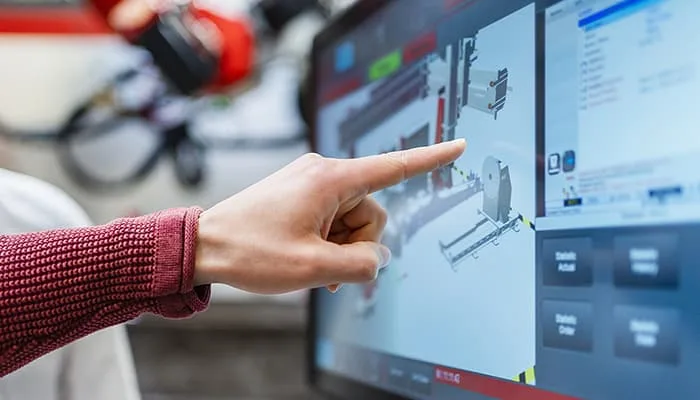
Operator touchscreens reduce training overhead and minimize operator data entry mistakes significantly. Regulatory traceability mandates require robust digital logging capabilities built directly into master controllers.
Easyweigh builds connectivity-ready architectures that interface smoothly with existing supervisory control systems and platforms. Advanced software interfaces provide actionable insights into overarching line efficiencies and performance trends. Facilities modernizing their operations benefit from open-protocol compatibility and flexible expansion modules. Comprehensive diagnostic reporting empowers technical teams to resolve minor anomalies before catastrophic failures occur.
Final Evaluation Metrics
Total cost of ownership extends far beyond initial capital expenditure and basic installation fees. Maintenance requirements, spare parts availability, and energy consumption heavily influence long-term financial viability and plant budgets.
Procurement teams evaluate vendor support networks and technical training availability before finalizing equipment contracts. Comprehensive supplier commitments ensure maximum equipment uptime across years of continuous industrial operation.
Weight Sorting parameters must adapt to evolving market demands and changing regulatory compliance requirements. Future-proofing production lines safeguards capital investments against premature technological obsolescence over time.
Strategic equipment choices empower manufacturing facilities to scale operations efficiently while maintaining uncompromising product quality standards for clients.