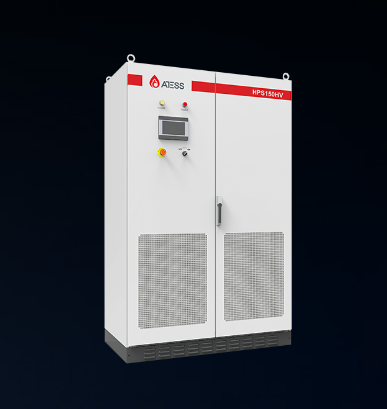
Across commercial solar projects, system reliability and long-term operational efficiency remain key considerations during equipment planning. When evaluating a hybrid inverter, project developers often focus on system compatibility, scalability, and energy management capabilities. Atess provides a range of solutions designed for commercial and industrial applications, supporting both grid-connected and off-grid energy systems.
Key Factors to Evaluate in Commercial Applications
A commercial hybrid inverter should support multiple energy sources while maintaining stable power delivery. According to Atess product information, their HPS series supports battery, load, grid, and solar connections within a single system. This integrated structure can simplify system architecture and reduce installation complexity.
For medium commercial and industrial projects, Atess offers solutions ranging from 30kW to 150kW and supports system capacities up to 600kW. Their products are designed for applications such as factories, shopping malls, office buildings, remote farms, and photovoltaic power stations. When reviewing hybrid inverters for solar, installers often consider whether the equipment can adapt to different project scales and operational requirements.
Performance Features That Support Daily Operations
Energy flexibility is another important aspect when selecting a hybrid inverter. Atess systems include programmable working modes such as peak-shaving, backup power, and self-consumption. These functions help businesses manage energy usage according to site requirements.
Several Atess models also feature multiple MPPTs, allowing greater flexibility for photovoltaic array design. For example, the HPS100/150HV includes two MPPTs, while the HPS100000TL/125000TL provides six to eight MPPTs. These design options help improve solar energy utilization in commercial installations.
When comparing hybrid inverters for solar, technical specifications such as battery voltage range and PV input capacity also deserve attention. Atess commercial models support battery voltage ranges up to 900V and PV voltages up to 1500VDC, offering flexibility for system configuration.
System Expansion and Reliability Considerations
Commercial projects often require future expansion. Atess states that some hybrid inverters for solar can operate in parallel, supporting larger system capacities as energy demand grows. Certain models also provide seamless transfer between on-grid and off-grid operation within 10ms, helping maintain power continuity during grid interruptions.
When selecting a hybrid inverter for a commercial solar project, factors such as scalability, energy management functions, PV compatibility, and backup capability should be carefully reviewed. Atess offers a broad portfolio of commercial energy storage solutions designed to support different project requirements while maintaining operational flexibility and reliable power performance.